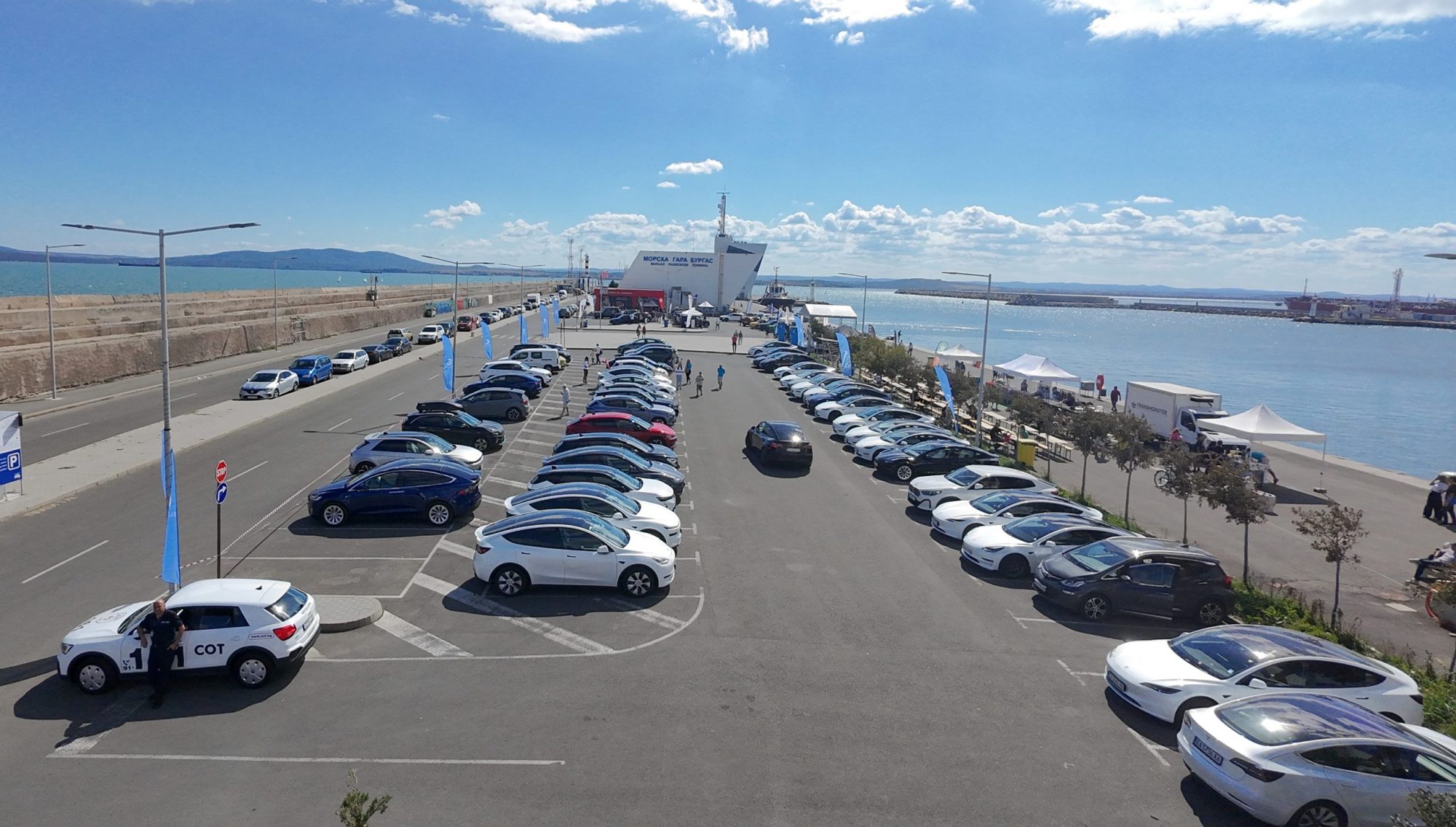
Impressed by the participation of Bulgarian dealers in the recent event organized by Eldrive, I asked an industry insider why representatives of various brands in Romania show no interest in promoting electric mobility.
From objective realities, such as concerns about losing the lucrative business of oil changes and periodic maintenance, to philosophical introspections about each person’s obligation to future generations, the dialogue took on a broader form that lasted several days.
Delving deeper into the discussion, I arrived at conclusions similar to those I reach after visiting one of the dealers in the Motor City area, where prosperity has been built for over a century on the individual need to travel from point A to point B.
Thousands of companies involved in everything from design, prototyping, testing, and manufacturing each car part are headquartered in the Detroit metropolitan area—rightfully nicknamed Motor City. The trades and the passion for automobiles have been passed down through generations, often making the car the focal point around which social dialogue revolves.
After a long process—from conception through testing, approval, and production—new cars arrive at dealers’ lots, awaiting customers deciding on a new model. For many years, these customers have been outnumbered by those opting for a used vehicle in reasonable condition for their budget.
Steady activity, periods of success and decline, the opening of new dealerships, and the acquisition or bankruptcy of the less fortunate or inspired have unfolded at a brisk pace for well over a century, with the same normality as the changing seasons. Until…?
The Tesla Shock
Until Tesla appeared—threatening not only the business of manufacturers of components and accessories needed for internal combustion engines, but also correctly perceiving that dealers could become an obstacle to the transition toward electrification of road transport—the status quo remained unchallenged.
The “audacity” to demonstrate that car sales can take place without intermediaries unleashed the most brutal instincts of preservation. The political machine, well-oiled by contributions to our elected officials’ campaigns from local to federal levels, became the main tool for blocking direct sales to end consumers.
In our case, we chose to purchase a Model 3 from the neighboring state of Ohio in 2018, because in Michigan Tesla was for a long time prohibited from selling directly to the public—a restriction that still exists today in a few North American states.
Alternatives
Our veteran TM 3 (LR RWD, 2018) is about to celebrate its seventh anniversary and proudly displays 180,000 km on the odometer. Naturally, we look for alternatives, visit various dealers, go on test drives, and narrow down the list of potential replacement models.
Although we are no longer met with long stares and comments like “Do you know how expensive they are?”—as we experienced in Timișoara (Romania) in the summer of 2018—the end result at traditional brands is the same irritating attempt to steer you toward a combustion-focused model, spouting all the anti-EV prejudices that haunt social media.
In this context, I find the frank statement of a service manager—also from Timișoara—much more honest, when he told me straight: “You electric people are taking bread from our mouths!”
More eloquently expressed, the absence of periodic maintenance—even though traditional brands enforce it through annual checkups or after a certain mileage to maintain warranty—has created fear in the world of service centers.
There are studies explaining why this fear is unjustified. Revenues can be maintained in the electric mobility universe, but through different types of service activities that require specialized training and more sophisticated equipment than currently used (for example: calibrating sensors after an accident, interventions on batteries and electronics, etc.).
In short, what we hear from the service side of dealerships is that the cost advantages generated by an EV for our pocket represent a loss for theirs, and so they will delay electrification as much as possible.
Responsibilities for Future Generations?
Having established and managed an auto service within a global network in my professional pedigree, I fully understand these fears. Once we reached this point in the dialogue, I tried to switch the focus to a parent or grandparent’s responsibility toward future generations.
Simply put, if caring for food, clothing, and clean water is easy to understand for most people I discuss this with, why is caring for cleaner air so hard to grasp?
At this point, the conversation took a philosophical turn, because I emphasized that, according to William MacAskill—the author of What We Owe the Future—there are existential risks that could permanently limit humanity’s potential:
Existential Threats According to William MacAskill
1. Climate Change
Although severe, MacAskill believes climate change is unlikely to cause human extinction. However, it can inflict long-term suffering and exacerbate inequalities if not responsibly managed.
2. Manmade Pandemics
Advances in biotechnology may enable the creation of pathogens far deadlier than natural ones. Accidental or intentional release could have catastrophic consequences.
3. Artificial Intelligence
The development of artificial general intelligence (AGI) could lead to “value lock-in,” where a single system of values dominates for centuries. Even worse, misaligned AI could cause irreversible harm or extinction.
4. Global Totalitarianism
MacAskill warns of the risk of a global authoritarian regime supported by surveillance and AI. If such a system becomes permanent, it could suppress moral progress indefinitely.
5. Nuclear War Between Superpowers
Although not listed among the four primary threats, MacAskill considers nuclear war a major catastrophic risk. A large-scale conflict could cause massive loss of life, environmental devastation, and global instability. However, he argues humanity might, in theory, recover—unlike risks that permanently lock in moral stagnation.
These threats form the basis of “longtermism”—the idea that safeguarding humanity’s future is a moral priority.
NOTE: Summary and translation provided with the assistance of Copilot AI.
What to Do?
Considering these five threats and individual powers of impact (beyond going to the polls and choosing clear-minded leaders—where possible), I have chosen to contribute to mitigating climate change with the help of the Electromobilitate project team.
I have noticed that as we age, we become radicalized in one direction. The term shouldn’t be taken negatively! It’s about deepening certain inclinations and concerns. In this case, a sense of ecological duty dictated the choice.
I adopted the notion of “ecological radicalization” as a badge of honor for the profound responsibility felt toward future generations, although we later agreed that “ecological dedication” would be more fitting.
I thank my interlocutors, real or imaginary, for the fascinating exchange of ideas sparked by a deceptively simple question: why won’t dealers of traditional brands sell electric vehicles?

My lifelong automotive career started with design and testing of ICEs, continued with service and sales, followed by 20 years of global seat design, requirements and knowledge management.
My recent passion for electric vehicles found its home at 24auto.ro and electromobilitate.